Stop Writing API Routes: Why Server Actions Are the 2026 Standard
Executive Summary
"Use Server Actions for all internal mutations. Keep Route Handlers for external integrations."
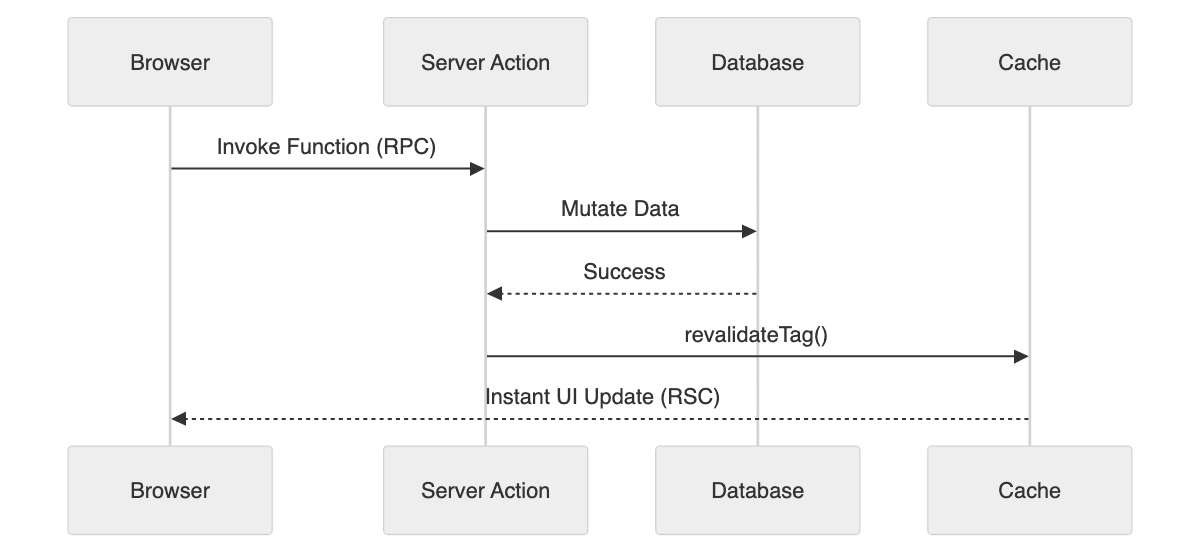
For years, web development involved a predictable dance: write an API route, call it with fetch, handle the JSON, and manually track loading states in React. It was repetitive and error-prone. In 2026, Server Actions have finally ended that cycle.
Think of a Server Action as a direct function call across the network. You don't need to define endpoints or manage CORS headers for internal app logic. Because they integrate directly with React 19 features like useActionState and useFormStatus, you get 'Optimistic UI' updates for free. You can delete hundreds of lines of boilerplate code and focus on the actual business logic.
There are still cases for standard API routes (now called Route Handlers). If you are building a public API, a mobile backend, or a Stripe webhook, you still need them. But for anything internal to your web app, Server Actions are faster to write and more secure. They have CSRF protection built-in and keep your data flow strictly typed from the database to the button click.
We have found that moving to a Server Action-first architecture reduces frontend codebases by about 30%. It makes the app easier to maintain and faster for the user, especially when paired with Next.js 16's 'use cache' directive for instant revalidation.
At WhiteForge, we analyze these trade-offs for every project to ensure our clients build on the most sustainable and performant stack available. Whether you are optimizing for user retention or developer velocity, the choice of framework is a foundational business decision.